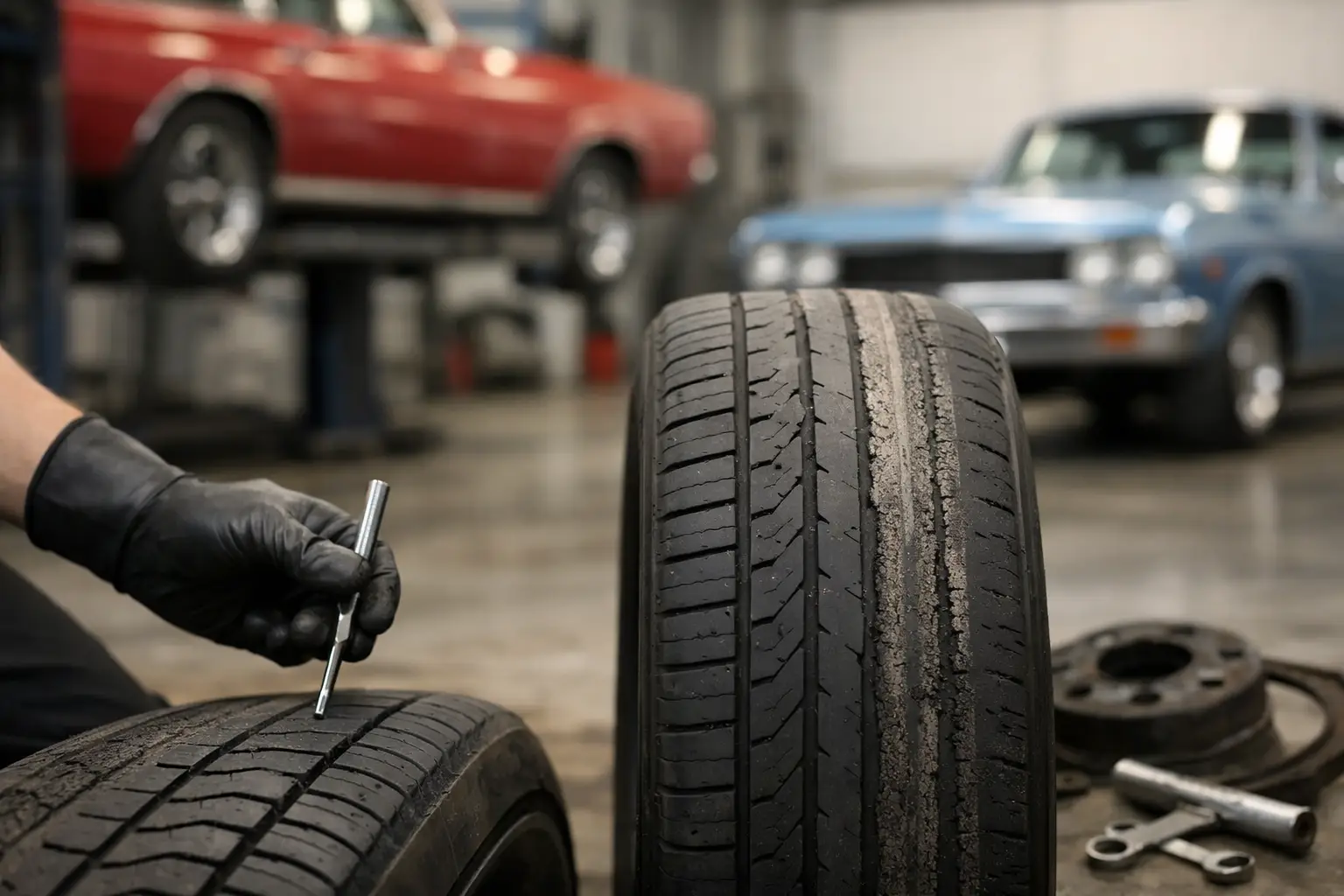
A tire can look fine from the side and still be wearing itself out long before its time. If your vehicle pulls, shakes at highway speed, feels loose over bumps, or suddenly needs tires sooner than expected, the tread pattern may tell the real story. Understanding what causes uneven tire wear can help Yukon drivers fix the underlying problem before a set of tires turns into a bigger repair bill.
Tires do not usually wear unevenly for no reason. Some wear comes from routine maintenance being missed, while other patterns point to alignment, steering, suspension, or wheel issues. The right repair depends on the pattern, the vehicle, and how it drives. That is why a proper inspection beats guessing or replacing tires without asking why the old ones failed.
What Causes Uneven Tire Wear?
Uneven tire wear happens when one part of the tire carries more friction, weight, or road contact than it should. The most common reasons are incorrect air pressure, poor wheel alignment, worn suspension or steering parts, unbalanced wheels, skipped tire rotations, and driving conditions.
A tire technician should inspect both the tread and the mechanical components behind it. A new set of tires may mask the issue for a while, but it will not correct a worn ball joint, bent wheel, weak shock, or bad alignment angle.
1. Incorrect Tire Pressure
Underinflation typically wears down both outer shoulders of the tread. When a tire is low on air, its center bows upward and the edges carry more of the vehicle’s weight. It also builds heat, hurts fuel economy, and can make the vehicle feel sluggish or unstable.
Overinflation usually creates the opposite pattern: excessive wear down the center of the tire. Too much air reduces the tire’s contact patch with the road, concentrating the load through the middle. The ride may also feel harsher over Yukon potholes, rough pavement, and expansion joints.
Check tire pressure when the tires are cold and use the pressure listed on the driver’s door placard, not the maximum number molded into the tire sidewall. Temperature swings can change pressure enough to matter, especially during Oklahoma’s hotter months and quick cold fronts.
2. Wheel Alignment Problems
An alignment is more than making a steering wheel look straight. It sets the angles that determine how each tire meets the road. When those angles are off, a tire can scrub across the pavement instead of rolling smoothly.
Excessive wear on the inside or outside edge often points to a camber issue. Camber is the inward or outward tilt of the wheel when viewed from the front. A vehicle with too much negative camber may wear the inside edge first, while too much positive camber can wear the outside edge.
Toe settings also matter. Toe describes whether the tires point slightly toward each other or away from each other. Incorrect toe can create a feathered tread pattern that feels smooth in one direction and sharp in the other when you run your hand across the tire. It can destroy a tire surprisingly fast.
Alignment can be knocked out by potholes, curbs, road debris, worn parts, or a hard impact. On older trucks and classic vehicles, alignment settings may also be affected by aging bushings, modified suspension components, or parts that are no longer holding their original position.
3. Worn Suspension or Steering Components
A wheel alignment cannot stay accurate if the parts that locate the wheel are worn out. Ball joints, tie rod ends, control arm bushings, wheel bearings, springs, shocks, and struts all play a role in keeping the tire planted correctly.
Cupping, also called scalloped wear, is a common warning sign. The tread develops alternating high and low spots around the tire, and the vehicle may make a humming or thumping sound that gets louder with speed. Weak shocks or struts are frequent contributors because they allow the tire to bounce rather than maintain consistent contact with the road.
Loose steering or suspension parts can also let alignment angles change as you brake, turn, or hit a bump. That is why an alignment alone is not always the honest answer. The worn component should be repaired first, then the alignment should be set afterward.
4. Wheel and Tire Imbalance
A wheel and tire assembly needs to be balanced so its weight is evenly distributed as it rotates. When it is not, drivers often notice vibration in the steering wheel, seat, or floorboard at certain speeds, commonly around highway speeds.
Imbalance does not always leave a dramatic tread pattern right away, but over time it can contribute to uneven wear and place extra stress on suspension components. A missing wheel weight, bent wheel, damaged tire, or poor tire mounting can all create balance problems.
If vibration began after a tire replacement, pothole strike, or curb impact, have the wheels and tires inspected instead of simply living with it. A shake is not just annoying. It is information about something the vehicle needs.
5. Skipping Tire Rotations
Front and rear tires often do different jobs. On most front-wheel-drive vehicles, the front tires handle steering, much of the braking force, and engine power. They commonly wear faster than the rear tires. Trucks can show different patterns depending on drivetrain, towing, payload, and whether they spend more time unloaded or working.
Regular tire rotations spread that work across the set. The right interval depends on the vehicle and tire manufacturer, but many drivers benefit from having tires rotated around every 5,000 to 7,500 miles, often alongside an oil change or other routine service.
Rotation will not fix an alignment or suspension problem. It does, however, prevent normal front-to-rear wear differences from shortening the life of two tires while the other two still look nearly new.
6. Worn, Damaged, or Mismatched Tires
Not every wear concern begins with the vehicle. A tire can be damaged by a hard road impact, internal belt separation, a puncture repair issue, or age-related deterioration. A tire with a shifted belt may look slightly out of round and can cause vibration, noise, or a repeated irregular wear pattern.
Mismatched tire sizes, tread depths, or construction can also complicate handling and wear. This is especially worth considering on all-wheel-drive and four-wheel-drive vehicles, where significant differences in tire circumference can place added stress on drivetrain components.
For classic cars and trucks, tire selection deserves extra thought. Modern tire compounds and sizes can improve handling and braking, but the wrong fitment can rub, alter steering feel, or create clearance problems. The best choice balances the vehicle’s intended use, load needs, original character, and safety.
7. Driving Habits and Vehicle Use
Hard cornering, repeated heavy braking, fast acceleration, frequent towing, and rough roads all affect tire life. That does not mean a driver is necessarily doing anything wrong. A work truck that carries tools every day or tows regularly will not wear tires like a lightly used commuter car.
The key is matching maintenance to how the vehicle is used. Fleet vehicles may need more frequent pressure checks, rotations, and inspections because downtime costs money. A weekend classic may need tire inspections based on age and storage conditions, even if it has not accumulated many miles.
How to Read Common Uneven Tire Wear Patterns
The location and feel of tread wear can give a technician useful clues. Wear on both shoulders often suggests low pressure. Center wear commonly points to overinflation. One-edge wear may indicate alignment trouble or worn suspension parts, while cupping can signal weak shocks, struts, or balance concerns.
Feathering often leads back to toe alignment, but the vehicle should still be checked for loose steering components. A single damaged area, bulge, or exposed cord is different from normal wear and should be treated as a safety concern. Do not wait for a routine appointment if a tire has a sidewall bulge, visible cords, or a sudden loss of pressure.
When to Schedule a Tire Inspection
Schedule an inspection if you notice the vehicle pulling to one side, a steering wheel that is off-center, vibration at speed, new road noise, uneven tread depth, or tires wearing out much earlier than expected. It also makes sense after hitting a pothole or curb hard enough to make you wonder whether damage occurred.
At Oil Pump, the goal is to identify the reason behind the wear, explain what is needed in plain language, and avoid selling repairs that do not solve the problem. For drivers who need a shop visit, the Route 66 location at 1001 W Main Street in Yukon is ready to help. For businesses trying to keep vehicles moving, on-site service can reduce the time lost to routine maintenance and repairs.
Before your next long drive, take one minute to look across all four tires. That small check can catch a problem while it is still a straightforward adjustment instead of an unexpected tire purchase on the side of the road.
Posted on by andres.tamayo@vehlo.com in Uncategorized
A tire can look fine from the side and still be wearing itself out long before its time. If your vehicle pulls, shakes at highway speed, feels loose over bumps, or suddenly needs tires sooner than expected, the tread pattern may tell the real story. Understanding what causes uneven tire wear can help Yukon drivers Read More
A warning light can feel like your vehicle is speaking another language. A rough idle, slow crank, strange vibration, or loss of power can be even more frustrating because there may be no warning light at all. Proper auto diagnostics turns those symptoms into a clear repair plan, so you are not paying to replace Read More
A work truck that will not start at 6:30 a.m. can derail more than one driver’s day. It can delay a crew, hold up deliveries, force last-minute schedule changes, and leave customers waiting. Fleet downtime reduction is not about chasing a perfect maintenance record. It is about catching problems early, making clear repair decisions, and Read More